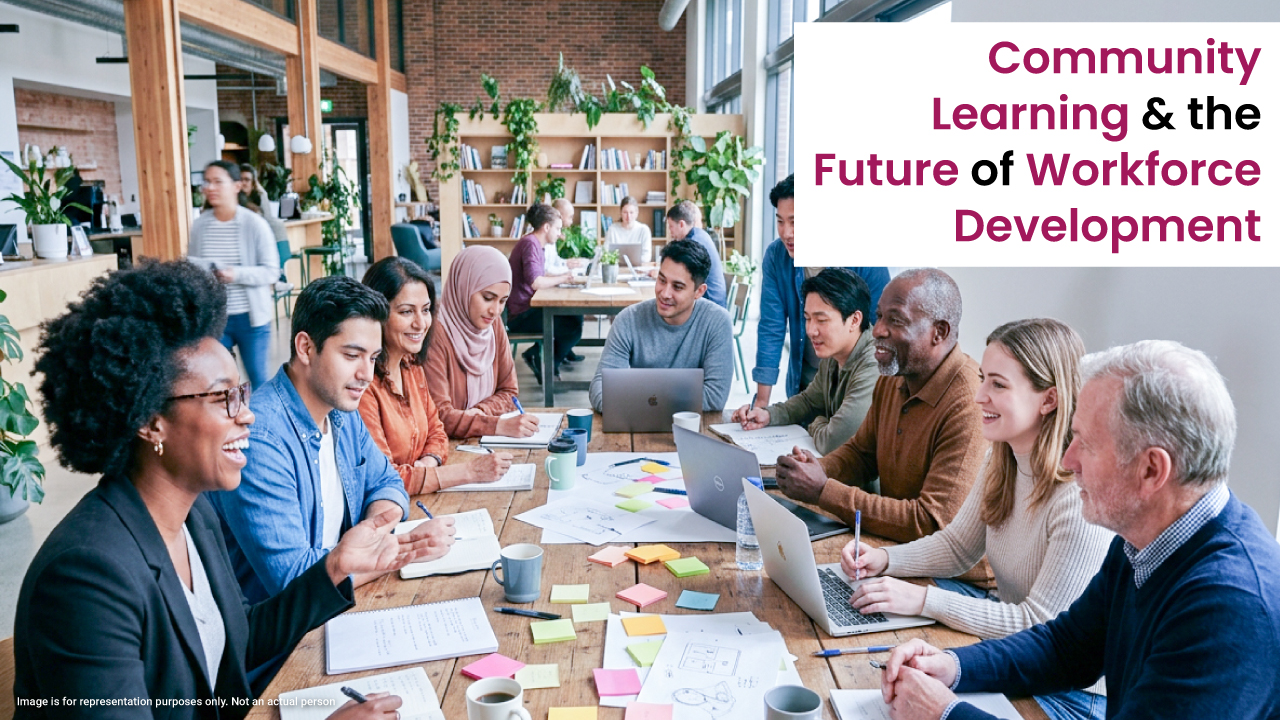
Workforce development has traditionally focused on classrooms, certifications, and formal training programs. While these remain important, the future of work demands a broader approach to learning. Today's professionals are expected to adapt continuously, collaborate across disciplines, solve complex problems, and navigate constant technological and social change. These capabilities are not developed through formal education alone. They are strengthened through shared experiences, diverse perspectives, and meaningful participation within communities.
Community learning is becoming one of the most effective means of workforce development since it shifts the focus from individual to collective learning. People can learn and practice useful skills through cultural events, through the community, through professional networks, creative partnerships, volunteering, or mentorship, preparing them for real-life experiences at work.
Community learning is a critical part of workforce readiness as organizations look for professionals who are flexible, creative, and emotionally intelligent.
Why Community Learning is Reshaping Workforce Development
The nature of work has changed significantly over the past decade. Professionals no longer rely solely on technical expertise acquired early in their careers. They are expected to learn, unlearn, and relearn as industries evolve continuously.
Community learning creates opportunities for this continuous growth by connecting individuals with people who bring different experiences, ideas, and perspectives. Unlike traditional learning environments where knowledge flows primarily from instructor to learner, community learning encourages dialogue, collaboration, experimentation, and shared problem-solving.
Individuals gain knowledge from mentors, peers, artists, entrepreneurs, teachers, researchers, and community leaders. They learn to communicate, lead, adapt, become culturally aware, and collaborate through experience rather than reading.
Through these experiences, people are equipped to survive and succeed in a world where working across functions, cultures, and disciplines is increasingly a key element of workplace success.
Workforce development is no longer only a professional development program. It is now becoming clear to organizations that workforce development is not just a professional development program. It extends beyond people's homes, work, play, and giving back to communities.
Learning Communities Build Human-Centered Skills
A great many of the most desirable skills for the modern work world are learned through interaction rather than instruction. Dialogue enhances communication. Leadership is a product of responsibility. Collaboration is the key to creativity. Empathy is a product of grasping lived experiences.
It is important to note that these human-centered capabilities are a natural state of community learning.
Being involved in a community project, cultural program, creative work, social enterprise, or volunteering to support others exposes people to situations that require them to work collaboratively, be resilient, think critically, and adapt. These experiences can simulate the team environment of today's organizations.
In addition to skill and expertise, community learning also builds confidence, social belonging, and social responsibility. Helping individuals to listen to others, work in teams, and communicate effectively.
These are now as much valued as technical skills in the workplace, which are becoming more global and diverse.
The future workforce will not only demand qualified workers. It will need people who can learn constantly, contribute, and develop alongside their peers.
Technology Connects People, Communites Growth
Learning has never been more accessible than it is with digital technologies. Professionals can now learn technical skills rapidly and effectively through online courses, knowledge platforms, artificial intelligence, and webinars.
But knowledge is not sufficient to develop capability.
When people engage in real-world situations, give feedback to themselves, work with others, and reflect on their experiences, they build capacity. Community learning has a particular and unique role to play here.
Technology can't replace the context that communities provide. They promote discussion rather than passive reading. They encourage a sense of belonging, not loneliness. They provide opportunities for experimentation, creativity, and problem-solving together, beyond the scope of structured learning programs.
The role of community learning is further enhanced in the era of AI, as the qualities most important for the future of work, such as empathy, cultural intelligence, communication, creativity, and ethical decision-making, are increasingly valued. These capacities are best nurtured through appropriate human interaction.
Communities are the ones that turn information into wisdom and action, and technology can help get information to them faster.
Building Workforce Around Communities
Smart companies are getting the idea that workforce development isn't just about programs within the organization. They're working with schools, creative companies, community groups, industry groups, and social enterprises to develop more vibrant learning environments.
Likewise, urban areas and regions that focus on developing community learning also tend to foster an innovation ecosystem by facilitating interactions between the private sector, education, the cultural domain, and civil society.
What will shape workforce development is less reliance on one-off learning sessions and more of an interconnected network of communities in which people can share ideas, collaboratively solve problems, and collectively advance a shared agenda.
Community learning produces professionals who are technically competent, socially literate, culturally responsive, and ready to take the lead in working collaboratively in environments where it is as important as know-how.
The more interconnected the work is, the more communities become powerful learning environments that affect individuals' success and collective resilience.
How Sumangali Media Is Building Communities That Inspire Learning
We, at Sumangali Media, know that learning occurs wherever people meet with curiosity, creativity, and shared experiences. Communities are not just audiences; they are living ecosystems through which ideas flow, relationships develop, and new possibilities emerge.
Sumangali Media establishes learning spaces that are not transactional but participatory, through original stories, cultural programs, artistic partnerships, community dialogues, and spaces for connecting diverse voices. We consider the role of creativity, culture, wellbeing, and collective experiences in creating a stronger community and a more human future of work.
In addition to the individual's formal education and workplace training, we strongly believe that communities play a role in fostering communication, collaboration, empathy, and creativity. Through stories, discussion, and reflections on community learning, Sumangali Media is part of a wider campaign that aims to elevate community learning as a critical pillar of workforce development, social innovation, and inclusive development in an integrated world.