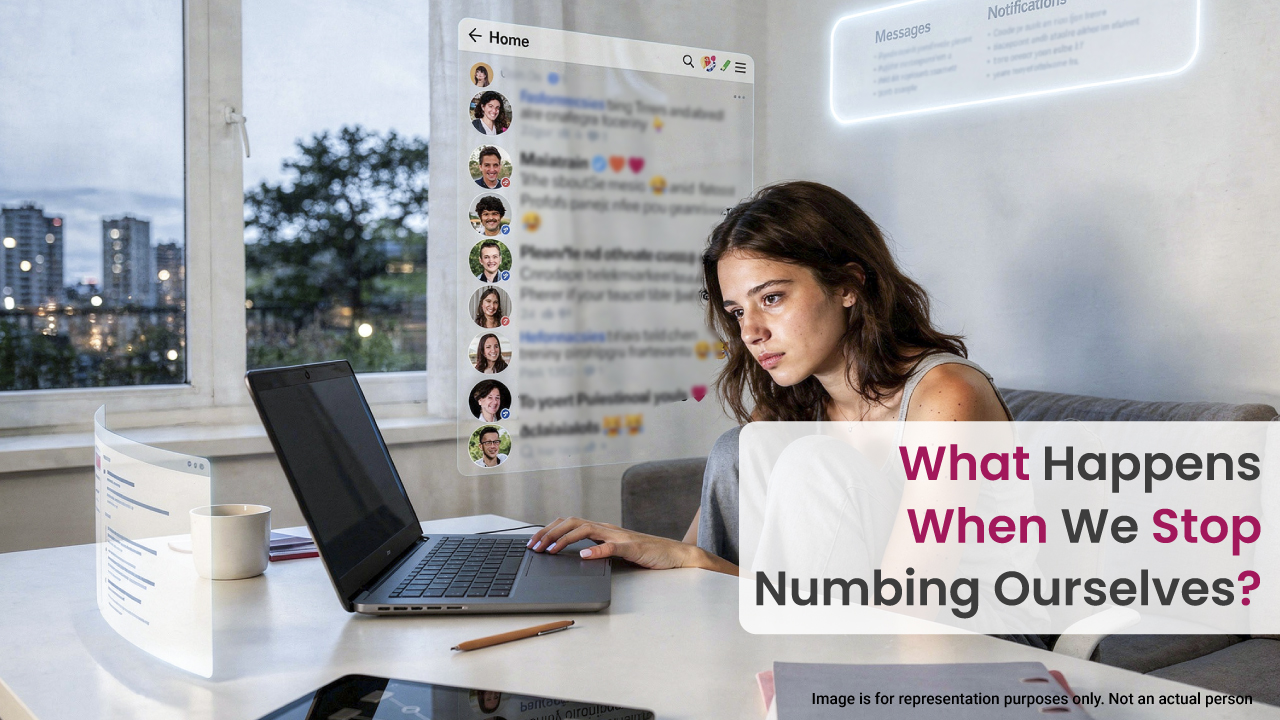
Every night before sleeping, Sara followed the same routine.
She scrolled through social media until her eyes burned. Then came another episode of a show she was only half watching, followed by random online shopping tabs she never intended to purchase from. Sometimes she ordered food she was not hungry for. Other nights, she worked late to avoid being alone with her thoughts.
Her life appeared to be normal on the outside. She had a steady job, good friends, weekend plans, and a personality people described as jovial and self-reliant. Below the constant distractions was a sensation which she could not describe.
She felt emotionally distant from herself.
Not sad enough to ask for help. Not happy enough to feel fully alive.
Just constantly occupied.
For many people today, emotional numbing does not look dramatic. It often appears as endless scrolling, binge watching, overworking, emotional detachment, or staying constantly busy. These behaviors may seem harmless individually, but together they create distance between people and their emotional reality.
Contemporary life provides us with unlimited opportunities to escape discomfort. The silence is soon substituted by messages. Loneliness is diverted with entertainment. The state of anxiety is hidden beneath productivity, and even time off is stimulated.
The problem is that avoided emotions rarely disappear. They wait beneath the surface.
Why Emotional Numbing Has Become So Common
It was first observed by Sara during a weekend trip with friends. All the people around her were laughing, dancing, taking photos, and enjoying the evening, but she felt oddly out of step with the experience. She smiled as expected and took part in discussions, but inwardly, everything was dull.
Later that night, sitting alone in her hotel room, she realized something unsettling.
She could not remember the last time she had truly sat with herself without needing noise in the background.
Many people develop emotional numbing as a protective response. Sometimes it begins after heartbreak, burnout, rejection, grief, or prolonged stress. Other times, it develops gradually through overstimulation and emotional overload.
The nervous system learns to protect itself by reducing emotional intensity. While this may create temporary relief, it also limits joy, connection, vulnerability, and presence.
People often believe they are avoiding pain, but over time, they also begin avoiding genuine emotional experience.
The Link Between Digital Overload & Emotional Disconnection
Technology has made distraction incredibly accessible. The average person can move through an entire day without experiencing a single moment of stillness. Every uncomfortable emotion can be interrupted instantly with content, noise, or activity.
For Sara, silence became uncomfortable. When troubling feelings were aroused, she automatically picked up her phone. She also read more when the situation was stressful. When she felt lonely, she would preoccupy herself with endless updates about other people's lives.
Yet there are repercussions of emotional avoidance.
The more disconnected she became from her emotions, the harder it became to understand herself clearly. Small frustrations triggered disproportionate reactions. Relationships started feeling emotionally shallow. Even achievements felt temporary and emotionally flat.
This is one of the hidden effects of constant numbing. When people disconnect from difficult emotions for too long, they also disconnect from emotional depth itself.
What Happens When We Finally Slow Down
One Sunday morning, Sara left her phone at home and walked to a nearby park with no specific plan. At first, the quiet felt uncomfortable. Her mind searched for distractions automatically. She felt restless. Impatient.
Then something unexpected happened.
Without constant stimulation, the emotions she had ignored for months began to surface. Fatigue. Loneliness. Fear about the future. Unprocessed disappointment from relationships she never fully healed from.
She cried unexpectedly while sitting on a bench beneath a tree.
Not because something dramatic had happened that day, but because her body had finally stopped running.
This is often what happens when people stop numbing themselves. Emotions that were buried beneath distraction are beginning to ask for attention. The experience can feel overwhelming initially, especially for people who have spent years avoiding emotional discomfort.
But emotional awareness is not regression. It is reconnection.
Emotional Healing Begins With Presence
Healing rarely begins with having all the answers. It often begins with the willingness to stay present long enough to notice what is happening internally.
In Sara's case, change was gradual. She minimized unconscious scrolling before sleep. She started being truthful in her journaling rather than just being happy online. She spent less time at home and did not need constant entertainment. Other days were out of place. Others were calm in a manner that she had not felt in years.
She realized she was not emotionally “broken.” She had become disconnected from herself through years of distraction and survival.
As conversations around mental health and emotional wellbeing continue growing across the United States, more people are recognizing the importance of emotional regulation, nervous system awareness, and intentional presence. Emotional wellbeing is no longer just about coping with a crisis. It is also about learning how to feel fully again.
How the BET Model by Sumangali Media Encourages Emotional Reconnection
This is where the BET Model developed by Sumangali Media offers a meaningful perspective on emotional wellbeing. The Body Emotion Thought framework understands that emotions are not simply mental experiences. They are deeply connected to the body, nervous system, memory, and everyday behavioral patterns.
The BET Model invites people to re-immune themselves to emotions they may have been repressing, ignoring, or numbing out over time. Instead of fostering perfection or unremitting positivity, it provides space for honesty, self-awareness, and emotional presence.
Sumangali Media is creating emotionally conscious narratives to connect with modern audiences facing stress, overstimulation, burnout, and emotional fatigue. In an age where people are busier than ever, learning to feel again could be one of the most significant forms of personal healing