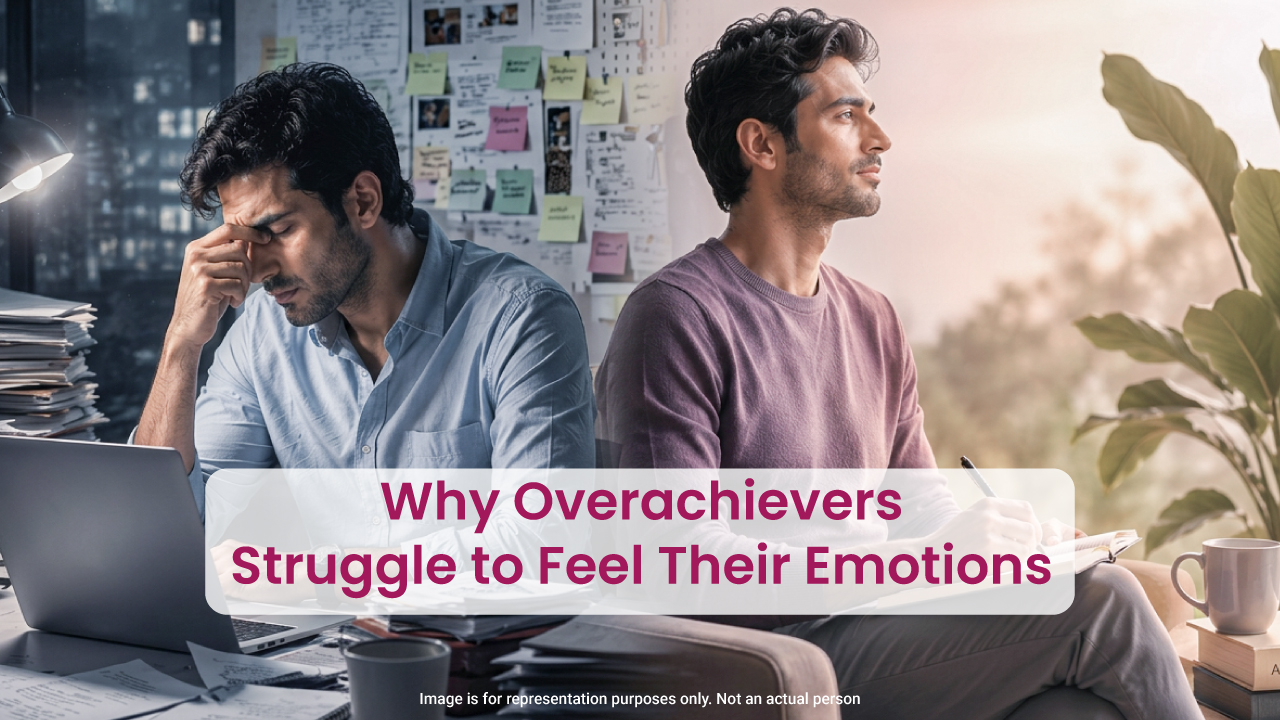
Aaron woke up at 7:15 in the morning when his alarm clock went off with military precision. In a matter of minutes, he was glancing at emails, scanning alerts, and psychologically preparing to go to work once again, another hard day. He had an appointment booked for the following three weeks. His performance appraisals were good. His LinkedIn profile showcased everything people look for in a successful young professional.
Somewhere between deadlines, strategy conferences, airport lounges, and presentations at the end of the day, something within him had stopped working.
He noticed it for the first time while talking to his younger sister. She was talking about a troubled period in her life, and though he listened attentively, he felt nothing. No sadness and no concern. There was no real emotional reaction. He had given solutions, practical advice, and reassuring words, but when the call was over, he sat, staring at the wall, with an uncomfortable realization.
He had become exceptionally skilled at functioning, but strangely disconnected from feeling.
Emotional disconnection does not seem dramatic to many high achievers. It hardly ever comes as a total collapse. Rather, it conceals itself in the guise of productivity, discipline, and constant movement. The world tends to reward those individuals who can withstand discomfort and continue performing despite pressure. Eventually, emotional suppression appears as a form of strength.
Why Successful Professionals Often Suppress Their Emotions
When children are developed to become ambitious adults, they will be commended for being composed, mature, and dependable. They are taught at a young age that success brings about safety, validation, and identity. Emotions that hamper the development are shoved aside unspoken. Anxiety becomes motivation. Exhaustion becomes commitment. Emotional overload is something to address in the future.
The problem is that the body does not forget what the mind postpones.
Aaron began noticing subtle signs. He woke up tired even after sleeping. His jaw remained tight throughout the day. He could not relax without scrolling endlessly on his phone. During moments that should have brought happiness, promotions, celebrations, and vacations, he felt strangely absent from his own life.
One night, having missed yet another family dinner due to his work commitments, he found himself sitting alone in his apartment well past midnight. The silence was something new. This was the first time in years that there was no job that required his attention. No presentation to make. No immediate message to respond.
And in that silence, emotions he had ignored for years slowly began rising to the surface.
The Connection Between Emotional Suppression & Burnout
Not all emotional suppression happens consciously. There are cases in which the nervous system adjusts to pressure, focusing too much on survival rather than on processing feelings. The body would transition to protection patterns when stress becomes constant. Individuals continue to act, but they lose touch with their inner emotional terrain.
That is why many high achievers cannot discover what they really feel. They can explain business strategies, solve intricate problems, and lead teams with confidence, but they freeze when asked simple emotional questions.
Are you happy?
Are you overwhelmed?
What are you carrying right now?
The responses can be stuck behind the scenes of performance and expectation.
The contemporary working culture enhances this lack of connection. Emotional sensitivity in most professional areas is still misconstrued as a sign of weakness. Individuals are advised to keep on optimizing themselves. The productivity is somehow self-important. Rest feels undeserved. When you slow down, you feel guilty.
Consequently, emotional intelligence is often forgotten in everyday life.
How the Body Stores Stress & Emotional Overload
The body, however, continues to communicate.
It appears that fatigue refuses to leave. Through tension headaches before important meetings. Through irritability during small inconveniences. Through emotional numbness in relationships. Through anxiety that surfaces during moments of stillness.
What many people call burnout is often deeper than physical exhaustion. It is emotional depletion caused by years of internal suppression.
Aaron did not transform overnight. There was no dramatic moment of healing. Instead, change began with small acts of awareness. He started taking walks without headphones. He noticed how shallow his breathing had become. He began journaling without trying to sound impressive. Some days, emotions surfaced unexpectedly. Sadness. Anger. Loneliness. Relief.
At first, it felt uncomfortable.
Then it started feeling honest.
He slowly realized that emotional awareness was not making him weaker. It was making him more human.
Emotional Awareness Is the New Definition of Success
High achievement and emotional connection are not opposites. The healthiest forms of success are built on self-awareness, not self-abandonment. People do not lose ambition when they reconnect with their emotions. They simply stop sacrificing themselves in the process of achieving.
In today’s fast-moving world, emotional intelligence, nervous system regulation, and embodied self-awareness are becoming essential parts of sustainable success. More professionals are beginning to recognize that healing emotional disconnection is not about becoming less capable. It is about becoming more present, grounded, and emotionally resilient.
How the BET Model by Sumangali Media Supports Emotional Wellbeing
It is here that our emotionally informed strategy - the BET Model can make a substantial difference. The Body Emotion & Thought framework acknowledges that emotions are not only psychological experiences but also embodied ones. Stress, suppression, fear, and emotional overload are frequently long-residing in the body long after the mind has left.
The BET Model invites people to re-relate to themselves in a more profound and sustainable way through reflective storytelling, emotional awareness practices, and body-centered understanding. Instead of encouraging the continual performance, it provides room for emotional literacy, self-awareness, and understanding of the nervous system.
Sumangali Media is still developing a discourse on emotional wellbeing that touches on human, accessible, and relevant to contemporary life. Slow down to do less: the emotional reconnection job can be among the most significant forms of healing today.