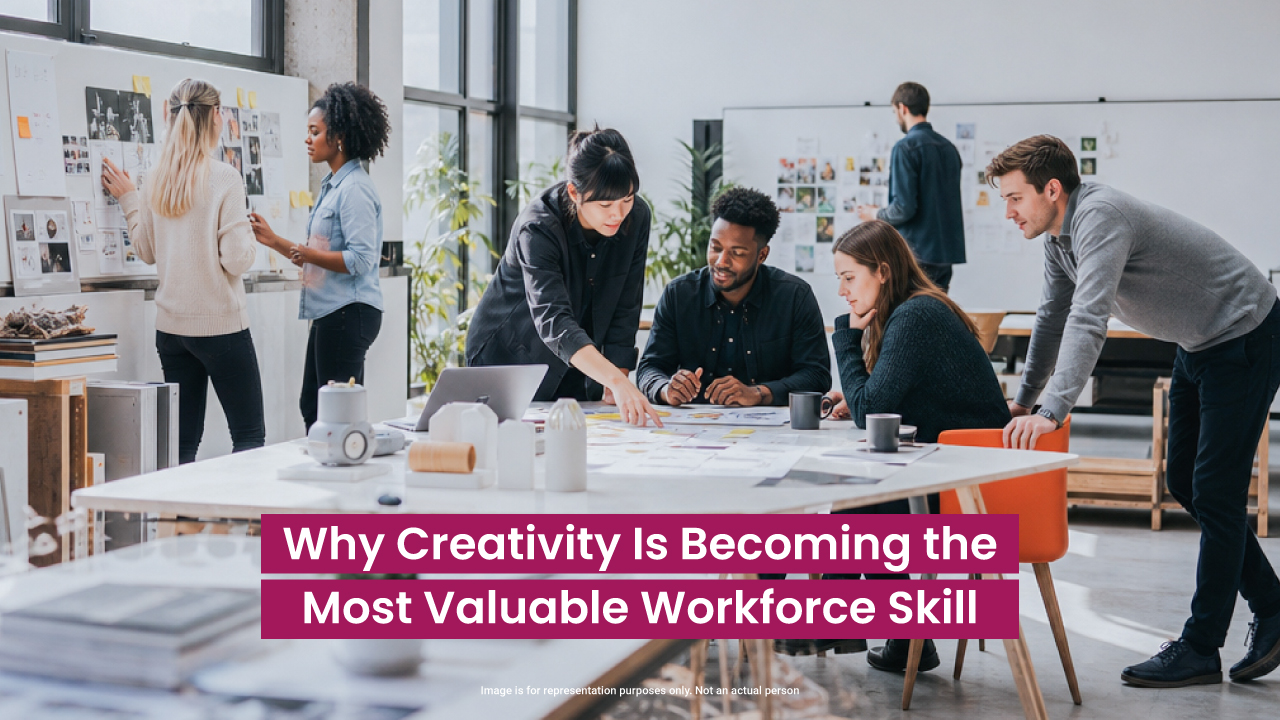
The conversation around workforce development has changed dramatically over the past decade. Organizations once prioritized technical expertise, operational efficiency, and standardized processes as the cornerstones of a successful workforce. Today, while technical skills remain important, they are no longer enough to differentiate individuals or organizations in an increasingly automated world.
Artificial intelligence can generate reports, write code, analyze data, and automate repetitive workflows. What it cannot replicate with the same depth is human imagination, emotional intelligence, cultural understanding, and the ability to create meaningful experiences. As technology continues to reshape industries, creativity is emerging as one of the most valuable skills in the workforce for individuals, businesses, and communities alike.
The future of work will belong not only to those who know how to use technology, but to those who know how to think differently.
Creativity Is No Longer Reserved for Artists
One of the biggest misconceptions about creativity is that it belongs exclusively to designers, musicians, performers, or writers. In reality, creativity is the ability to generate new ideas, solve unfamiliar problems, connect unrelated concepts, and adapt to changing circumstances.
Every profession now requires creative thinking.
A teacher designs engaging learning experiences. A healthcare professional finds innovative ways to improve patient outcomes. A business leader develops new revenue models. An engineer solves complex technical challenges. A community organizer creates programs that inspire participation. Creativity is no longer a specialized talent. It is becoming a universal workforce capability.
Organizations increasingly recognize that innovation is not the responsibility of one department. It is a culture built by people who are encouraged to question assumptions, experiment responsibly, collaborate openly, and continuously learn.
As automation handles predictable work, creative thinking becomes the engine behind value creation.
The Future Workforce Needs Human-Centered Skills
The World Economic Forum and top research on the workforce continually highlight a need for skills that are hard to automate. Industries are increasingly looking for these skills: Critical thinking, Communication, collaboration, emotional intelligence, adaptability, leadership, and creativity.
These are not stand-alone skills! They support each other.
Creative professionals clearly and effectively convey ideas. Teams are more effective as they work with each other across disciplines. Emotional Awareness Leaders inspire Innovation by creating psychologically safe environments where everyone feels confident sharing new ideas.
The world of AI in the workplace is characterized by a rapid pace of change, in which technical skills are quickly outdated. New tools are launched every month, industries are moving quickly, and job positions are constantly changing. Creativity helps individuals deal with uncertainty by allowing them to test out things rather than rely on a single answer.
Future-ready professionals ask, "Is there a better way to achieve the outcome?" rather than asking, "How do we follow the process?
That attitude will shape the workforce of the future.
Creating Creative Workforces Must Be Done On Purpose
Creativity is often seen as a gift, but research and experience indicate otherwise. The development of creativity, like communication or leadership, can be done deliberately, through exposure, collaboration, and reflection.
Innovation is a habit in organizations that encourages curiosity more than discourages it. They promote inter-departmental cooperation, welcome alternative ideas, and allow staff to try something new without the risk of failure.
In the same way, educational institutions and workforce development programs are beginning to understand that they must do more than teach technical skills to prepare their graduates for employment. Students are required to become comfortable with vocalizing ideas, solving real-world problems, working with multiple teams, and being flexible in various situations.
These creative learning experiences can include storytelling, moving, talking, design thinking, community involvement, and experiential learning. Not only do these approaches boost imagination, but they also boost resilience, empathy and communication – all of which are crucial for long-term employability.
The people who will be working in the future won't just need more information. It will require people who can turn information into action.
Creativity Strengthens Communities, Organizations, & Society
Creativity has far-reaching consequences that extend beyond an individual's career success. Creativity communities are more resilient because they can adapt to change, are better equipped to address social problems, and create solutions that are specific to and relevant to their local context.
Companies with creative cultures are more likely to attract top talent, boost employee engagement, and foster continuous innovation. Empowered groups tend to show greater levels of ownership and cooperation.
At the societal level, creativity promotes entrepreneurship, contributes to cultural identity, civic engagement, and the economic development of the creative industries. Creativity is a way for people to establish meaningful relationships with one another that cannot be formed through technology.
Creativity should not be seen as an enrichment activity in workforce development, given the fieldis continual change. It is a strategic skill that needs to be recognized as a skill to develop to enable people to perform well in complex, connected, and changing environments.
How Sumangali Media Is Shaping the Future of Creative Work
At Sumangali Media, we believe creativity is not simply an artistic pursuit. It is the foundation of innovation, connection, and human progress. As technology transforms the way we work, the qualities that make us uniquely human, our ability to imagine, empathize, communicate, and create together, become even more valuable.
Through original storytelling, cultural initiatives, community experiences, conversations, and collaborations across the arts, education, wellbeing, and social impact, Sumangali Media explores how creativity shapes the future of work and society. We bring together diverse voices, disciplines, and lived experiences to spark dialogue, inspire new perspectives, and celebrate the creative potential that exists within every community.
Rather than viewing creativity as a niche skill, we advocate for it as a critical capability that strengthens organizations, empowers individuals, and builds more resilient communities. By championing creative expression, cultural participation, and human-centered thinking, Sumangali Media contributes to a broader movement that recognizes creativity as an essential driver of workforce development, innovation, and inclusive growth.