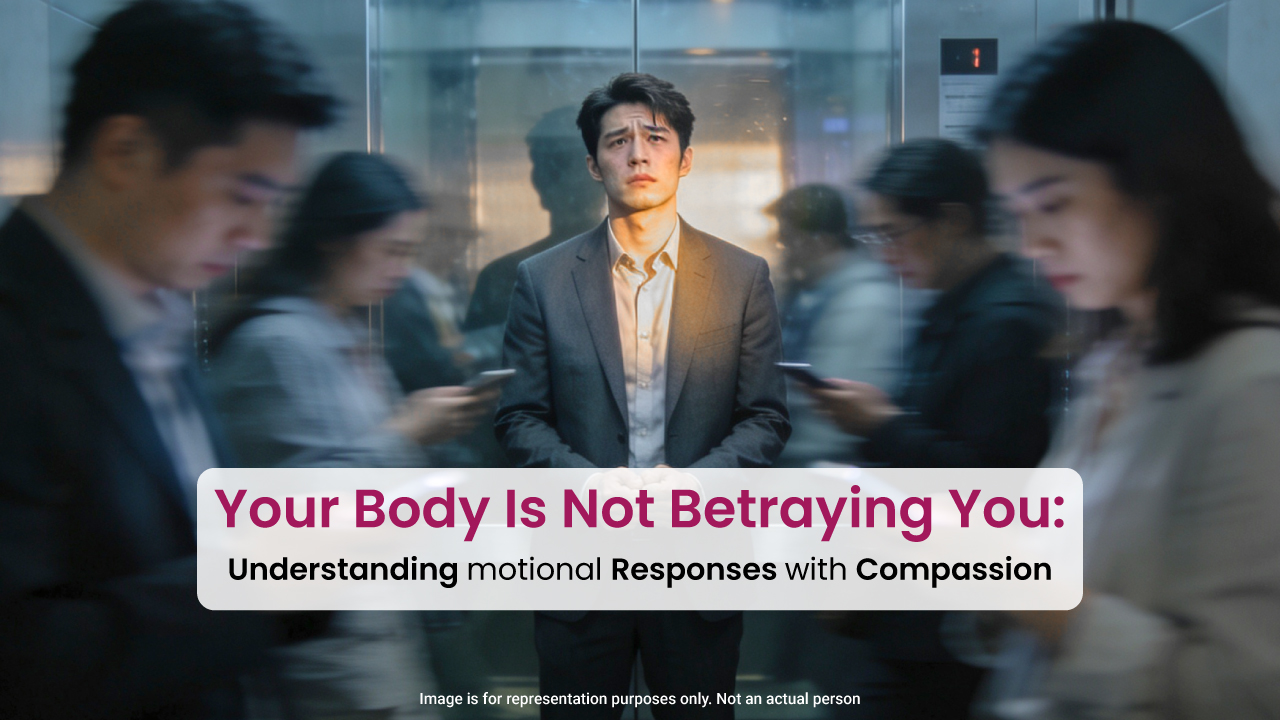
The first time Ethan saw it was at a regular meeting on a Monday morning.
He felt no sense of urgency. His hands were sweaty. There was a feeling of constriction in his chest as people talked to him about deadlines and goals. But nothing bad was happening, and his body was acting as if something terrible were.
He did his utmost to tune out.
As the weeks went by, the symptoms could no longer be ignored, and they had trouble sleeping well before presentations. Surrounded by loud environments, they suddenly became tiring. He was exhausted for hours when a small conflict arose. On some mornings, he would find himself feeling tired before he'd even left his bed.
After a while, he began to wonder what a lot of people go through and reflect on:
So, what is the matter with me?
Ethan's life seemed to be on a steady path from the outside. He was employed, he had friends who would support him, and he had a carefully constructed, stable self-image. He could feel the sadness and frustration inside him as he became aware of his emotional and physical response. He wanted his body to work for him. To stay calm. To end the cycle of worry, fatigue, stress, and overload that was interfering with his life.
What he didn't yet know is that his body wasn't betraying him.
In fact, it was communicating with him.
Why Emotional Responses Often Feel Physical
People are often taught to control their feelings, hide them, and control them. So, uncomfortable feelings are frequently interpreted as a sign of weakness rather than as information. They learn to ignore fatigue, block out feelings of sadness, ignore stress, and push aside the feeling of emotional overload until the body takes a harder stance.
Even if the mind skips over the experience quickly, the body and nervous system are constantly working on it. The situations of stressful conversations, unresolved grief, chronic pressure, emotional rejection, burnout, and extended anxiety do not simply go away if you stop thinking about them.
The body remembers.
Years of consistent action had made Ethan's nervous system respond as if he needed to survive. He had become so accustomed to stress that he found calmness outside his comfort zone. His body was used to working under stress, and even moments of rest felt uncomfortable,
This is why emotional distress often appears physically before people fully recognize it emotionally.
The signals may include:
-
Tightness in the chest
-
Muscle tension
-
Fatigue
-
Digestive discomfort
-
Shallow breathing
-
Restlessness
-
Emotional numbness
-
Sudden irritability
-
Difficulty concentrating
These responses are not signs of failure. They are often signs that the nervous system has been carrying more than it can sustainably hold.
The Problem With Treating Ourselves Like Machines
People are continually encouraged to optimize themselves in modern culture. Productivity is celebrated. Fortitude is sought after. Rest is often considered a reward for tiredness.
Being vulnerable was a scary prospect for someone such as Ethan. Whenever the stress came up, he would work harder and be busier. He felt that discipline would alleviate emotional pain.
Emotional suppression, however, doesn't eliminate pain. Typically, it delays it.
After one evening of work, Ethan woke up his car to find himself in the parking lot long after they got home. The radio was off. His mobile had gone flat. It was a time when there was no one to interrupt him, at least not for the first time in months.
And suddenly, emotions he had avoided began surfacing all at once.
The pressure he constantly carried.
The loneliness hidden beneath productivity.
The fear of disappointing people.
The exhaustion he had spent years denying.
He realized that he was treating his body like an obstacle to getting where he wanted to go, rather than as a messenger.
Emotional Awareness Begins With Self-Compassion
Many people become angry with themselves for feeling overwhelmed emotionally. They criticize their anxiety, judge their sensitivity, or resent their exhaustion. But healing often begins when people stop fighting their emotional responses and start listening to them with compassion.
Ethan's healing wasn't immediate. There was no big moment. Rather, it started with subtle changes in consciousness.
He began to notice the impact of stress on breathing. He lowered his pressure not to show emotions at all times. He started walking quietly, with nothing distracting him. On some days, he wrote down the feelings he usually disregarded.
Slowly, he stopped asking, “What is wrong with me?”
And started asking, “What is my body trying to tell me?”
That question changed everything.
Because emotional healing is not about forcing the body into silence, it is about creating enough safety to hear what it has been communicating all along, finally.
The Growing Importance of Nervous System Awareness
Discussions about mental health and emotional wellbeing are changing in the United States. There is growing awareness that emotional health and wellness are closely linked to the nervous system, the body, and life experiences. No longer a personal flaw, anxiety, emotional shutdown, chronic stress, and overwhelm are understood. One thing that is now becoming understood is that these are human reactions to long-term emotional overload and overstimulation.
This shift is helping people approach themselves with greater compassion instead of constant self-criticism.
Because sometimes the body reacts strongly, not because it is failing, but because it has been protecting someone for far too long.
How the BET Model by Sumangali Media Supports Emotional Understanding
That's where the BET Model by Sumangali Media offers a powerful, insightful emotional approach. In the Body Emotion Transformation framework, emotions are not one-off mental occurrences. They are intimately involved with what the body feels, how the nervous system reacts, recollections of past experiences, and emotions experienced throughout the year.
The BET Model helps people become aware of their emotions through reflective stories, body-centered awareness, and emotionally intelligent conversations without judgment. It provides room to reconnect with oneself without shame, suppression, or emotional avoidance.
Sumangali Media continues to create compelling stories for emotional wellbeing that resonate with people who experience contemporary stress, burnout, emotional fatigue, and inner disconnection. Learning to listen with compassion to the body might be one of the most healing practices in a world that is largely oblivious to its needs.