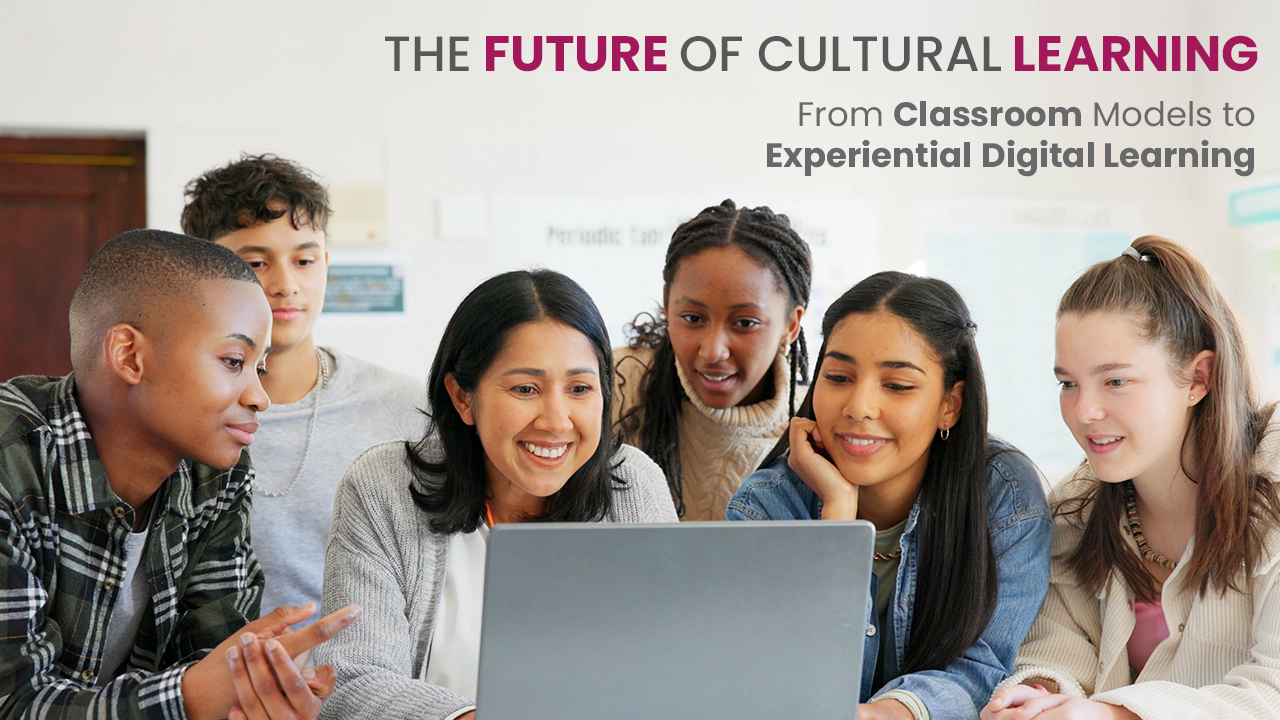
For generations, cultural learning happened in traditional classrooms with structured lessons, memorized facts, recited histories, and standard interpretations of art, literature, and heritage. While these methods had their place, they often missed the emotional depth, real-life experiences, and intuitive wisdom found in culture. Culture is not just theory; it is practiced, expressed, performed, and lived. Today, our digital-first world is changing how we learn about culture.
With more people moving around the world and building hybrid identities, modern and accessible cultural learning is more important than ever. Young people, especially those living away from their homelands, want to connect with their roots through real experiences, not just information. They want to feel their heritage, not just read about it. Advances in learning technology now make this possible, opening up creative, interactive, and authentic ways to learn about culture.
From Passive Absorption to Active Participation
Traditional models focused on passive learning, where students listened, took notes, and repeated information in tests. But cultural learning works best through immersion, participation, and expression. Today’s learners want to experiment, create, talk, and work together.
This change is the start of what many educators call experiential digital learning, where content becomes a lively, sensory experience instead of just a one-way flow of information. Virtual tours of heritage sites, interactive storytelling, gamified language lessons, and step-by-step video guides for the arts are just a few examples. Digital platforms now let learners connect with culture in ways that fit their lives, interests, and pace.
The Rise of Multimedia and Multisensory Learning
Modern cultural education relies heavily on multimedia. Videos, animations, interactive audio, AR and VR, digital performances, and rich visuals are now key to how people learn. We connect more deeply when we can see, hear, and interact with content all at once.
For example:
- A Bharatnatyam lesson becomes more accessible when combined with slow-motion breakdowns, visual cues, and rhythmic audio tracks.
- A folk story becomes more memorable when it incorporates animated characters, voice narration, and culturally symbolic elements visually embedded in scenes.
- Classical music appreciation is enhanced when learners watch performances, visualize the instruments, and explore the artist’s history through interactive timelines.
This multisensory approach makes sure cultural knowledge is not lost in translation. Instead, it brings culture to life in a way that matches how today’s generation learns and shares information.
Community-Based Learning, Now Digitally Powered
Cultural learning has always been social. Communities practiced arts, celebrated festivals, and passed down values by sharing experiences. Now, digital platforms bring this togetherness online with virtual communities, workshops, group performances, and global cultural circles.
Live classes with instructors, group discussions, and collaborative projects help bring back the feeling of shared cultural practice, even when learners are far apart. This is especially helpful for diaspora families, as it helps them stay connected across continents.
Inclusive Access: Expanding Cultural Learning Beyond Boundaries
Earlier, access to cultural learning depended a lot on where you lived. Not every city had a classical music teacher, a theater expert, or a historian of mythology. Digital learning has removed these barriers, making cultural knowledge available everywhere. International communities now have equal access to high-quality cultural education. This democratization of access is one of the most transformative benefits of technology in the cultural ecosystem.
Digital content is also more inclusive for people with disabilities. Features like captions, subtitles, audio descriptions, visual contrast options, and flexible pacing help make learning fit each person’s needs.
The Future: Immersive, Personalized, Hybrid Cultural Learning
As AI, AR, VR, and creative technologies develop, the future is moving toward immersive hybrid models like these:
- AI tutors to personalize cultural learning paths.
- VR spaces to walk through ancient temples, art galleries, or festivals.
- Interactive learning that adapts to the learner’s pace and style.
- Hybrid workshops combining digital and in-person community activities.
This does not replace human practice; it strengthens the ongoing flow of culture.
The Role of Sumangali Media in Shaping this Future
Sumangali Media stands at the heart of this cultural learning transformation by merging creativity, technology, and community impact. Through our curated content services, which include learning content, digital media, and visual storytelling, our platform ensures that cultural knowledge is not only preserved but also presented in a way that resonates with modern learners.
Its community-driven approach, including performing arts, workshops, and celebrations, anchors culture in expression and shared experience. Sumangali Media’s community spaces: safe, creative, and thematic, offer nurturing environments for exploration, healing, and connection.
By integrating experiential digital learning with intentional community, Sumangali Media helps families, young people, and diaspora communities reconnect with their cultural identity in real, engaging, and modern ways. We bring together tradition and technology to create a vibrant cultural space where learning is personal, accessible, and joyful.
| Insights | Explanation |
|---|---|
| Cultural learning is shifting from passive to experiential | Traditional methods focused on memorization, while modern approaches emphasize participation, creativity, and immersion to make learning more meaningful. |
| Multimedia enhances cultural understanding | The integration of video, audio, animation, AR, and VR creates multisensory experiences that help learners connect with and retain cultural knowledge. |
| Digital platforms enable global cultural communities | Technology allows learners across geographies, especially diaspora communities, to connect, collaborate, and experience culture collectively. |
| Accessibility is transforming cultural education | Digital tools remove barriers, making cultural learning inclusive and accessible to diverse audiences, including those with disabilities. |
| Hybrid & personalized learning is the future | AI, immersive technologies, and community-based experiences are shaping a future where cultural learning is tailored, interactive, and deeply personal. |
FAQs
Experiential digital learning involves engaging with culture through interactive, creative, and participatory formats instead of passive memorization.
Technology uses multimedia and immersive tools such as video, audio, AR, and VR to create engaging, multi-sensory learning experiences.
Cultural learning thrives on shared experiences and participation, with digital communities enabling collaboration and cultural exchange globally.
Yes, digital platforms remove geographical barriers and offer accessible features that support diverse learners, including those with disabilities.
Sumangali Media blends technology, storytelling, and community engagement to create immersive and accessible cultural learning experiences.