← Back to Blog
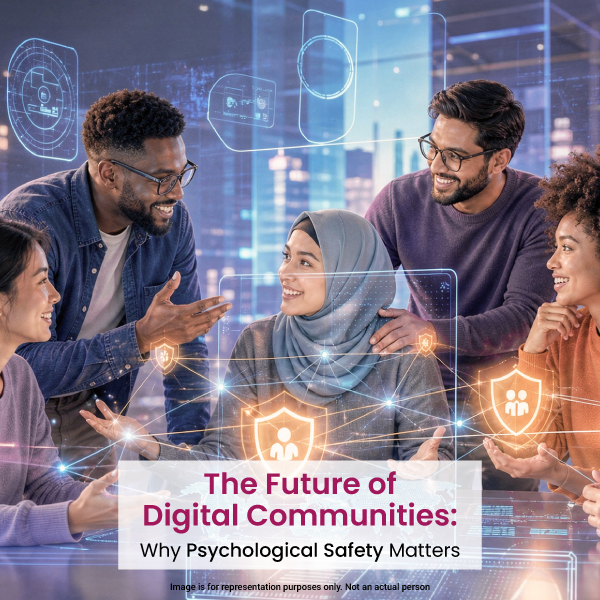
The Future of Digital Communities: Why Psychological Safety Matters
In the early days of the internet, speed and global reach brought people together from all over the world. Forums, social networks, and media sites opened up new ways for anyone to share ideas, form communities, and find information. The main goal was to connect as many people as possible and let information flow freely, turning the internet into a lively and creative space.
But as online spaces grew, new problems started to appear. Many websites focused more on keeping people engaged than on their well-being, using algorithms that encouraged clicks and stirred up arguments. Anonymity sometimes led to rude or fake behavior, and conversations grew noisier without improving. These changes made thoughtful people less likely to join in, and many who once shared great ideas stopped participating. As a result, important voices were lost, underscoring why we need safer, more respectful online spaces.
Seeing these changes, designers, educators, and community leaders now view psychological safety as key to healthy online spaces. When people can share their thoughts without worrying about being mocked or attacked, real participation grows. Feeling safe fosters trust and creativity, and it is also essential for real innovation and learning. Making these values a priority is becoming a main goal for anyone building strong, lasting online communities.
Amid these challenges and opportunities, Sumangali Media is playing a vital role in reshaping the future of digital interaction. By focusing on depth, purpose, and emotional awareness, Sumangali Media is committed to crafting online experiences that nurture trust, empathy, and a sense of belonging. Through carefully curated stories, innovative content platforms, and a culture of meaningful interaction, Sumangali Media helps build the emotional infrastructure that modern digital communities need to thrive. Their approach demonstrates how digital spaces can foster reflection, curiosity, and genuine connection in an increasingly fast-paced world.
Learn More: Designing emotional infrastructure for psychological safety in online platforms